




What Size Tablet Is Best for Reading Sheet Music? 10 vs 13 vs 15.6 Inch

Quick Comparison: Tablet Sizes for Sheet Music
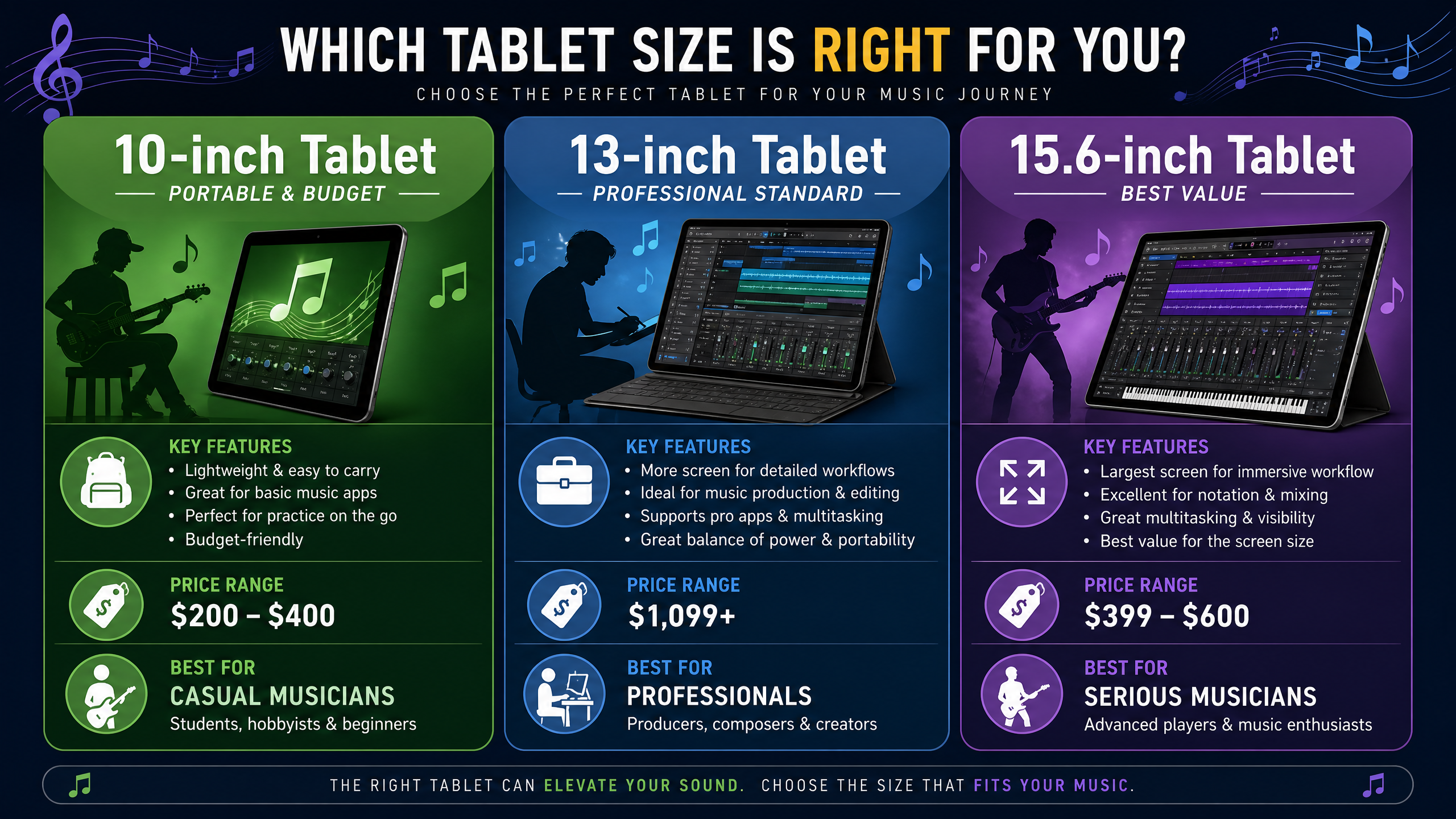
| Tablet Size | Portability | Screen Real Estate | Best For | Price Range |
|---|---|---|---|---|
| 10-inch | ★★★★★ | ★★☆☆☆ | Casual musicians, travel | $200-400 |
| 13-inch | ★★★☆☆ | ★★★★☆ | Professional musicians | $600-1000 |
| 15.6-inch | ★★☆☆☆ | ★★★★★ | Serious musicians, studios | $399-600 |
10-Inch Tablets: Maximum Portability, Compromised Readability
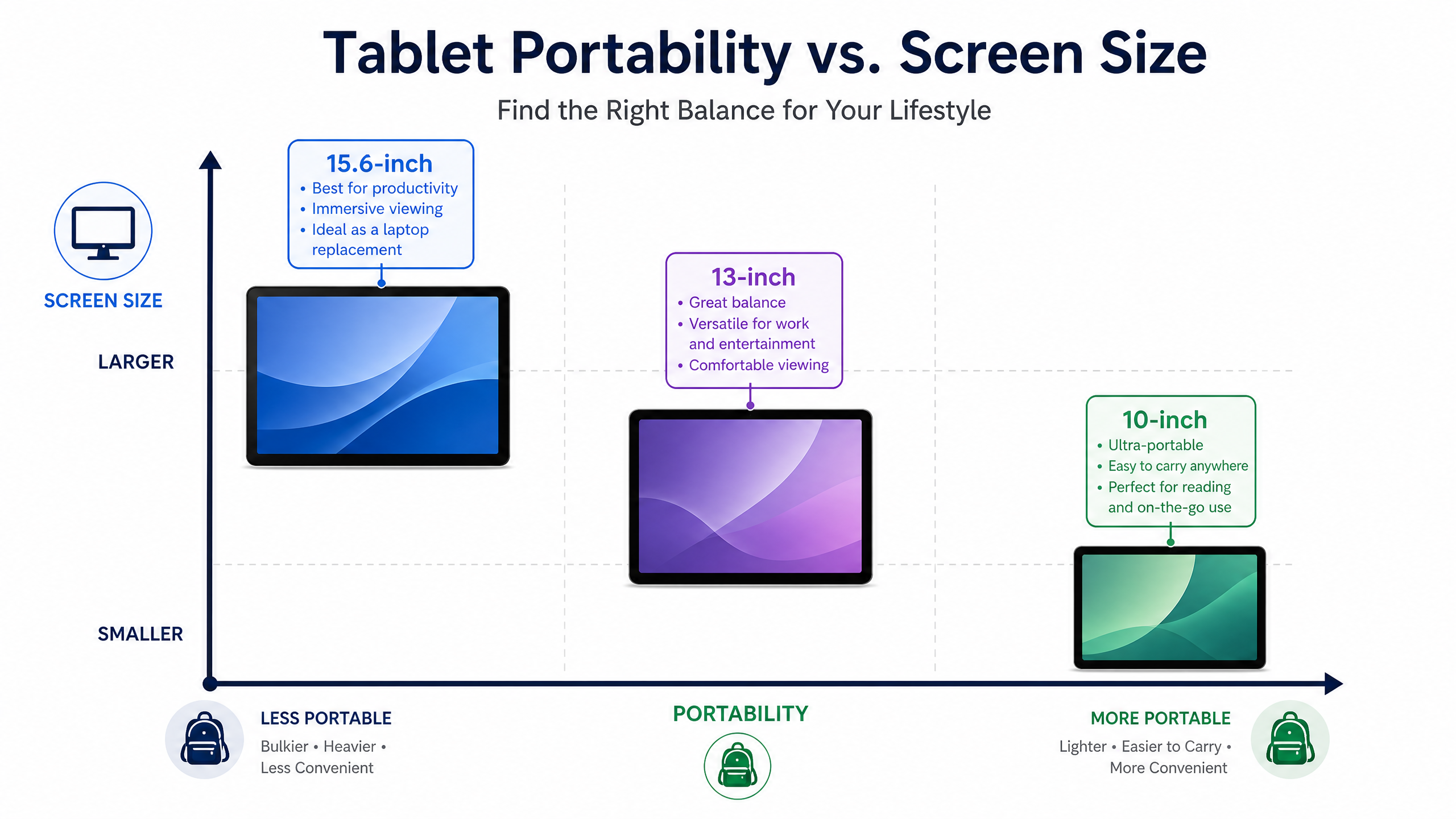
Meswao B3 Pro review sheet music stand setup Best Tablet for Sheet Music A 10-inch tablet is the most portable option available. It weighs around 1 pound, fits easily into a music bag, and is perfect for musicians who need to move between practice rooms, rehearsals, and lessons. However, when it comes to reading sheet music, the 10-inch screen presents significant challenges.
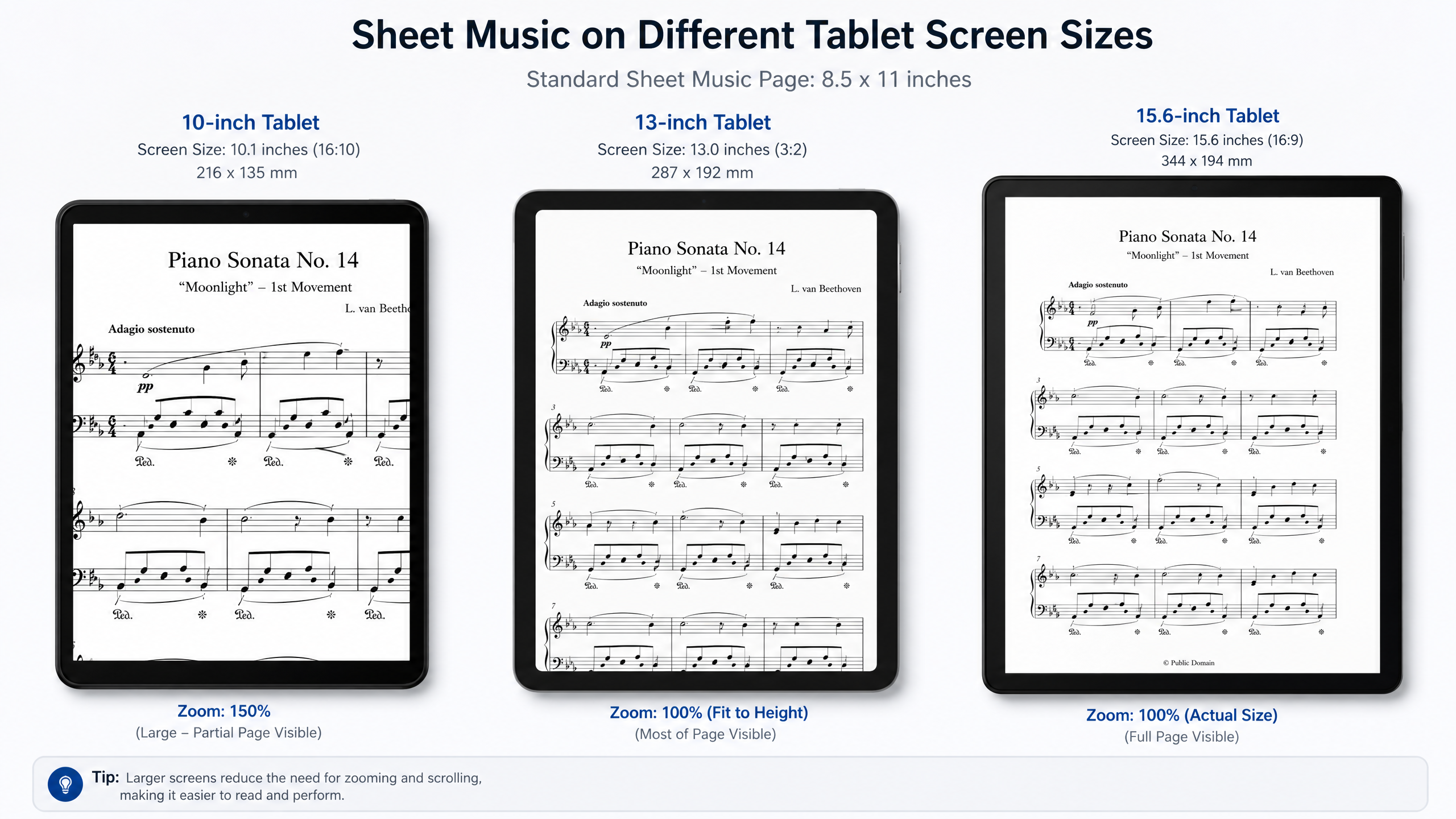
Standard sheet music pages are 8.5″ × 11″, which means a 10-inch tablet can only display a portion of the page at readable size. You’ll constantly need to zoom in and out, scroll left and right, and pan around the page—a frustrating experience during practice sessions. This constant adjustment breaks your focus and interrupts your musical flow.
Pros of 10-Inch Tablets:
- Highly portable and lightweight
- Affordable ($200-400)
- Great for general use beyond music
- Easy to hold for extended periods
Cons of 10-Inch Tablets:
- Sheet music appears cramped and small
- Requires constant zooming and scrolling
- Difficult for complex musical scores
- Causes eye strain from reading small text
- Not ideal for professional musicians
13-Inch Tablets: The Professional Middle Ground
A 13-inch tablet (like the iPad Pro 12.9-inch) represents the professional standard for musicians. At this size, you can display most sheet music pages at a readable size without excessive zooming. The 13-inch form factor is large enough to be practical for serious musicians while still being portable enough for rehearsals and performances.
The iPad Pro 12.9-inch, in particular, is the industry standard for professional musicians because of its exceptional display quality, smooth performance, and excellent app ecosystem. However, at $1,099 and up, it’s a significant investment.
Pros of 13-Inch Tablets:
- Professional-grade display quality
- Excellent app ecosystem (especially iOS)
- Good balance between portability and screen size
- Supports stylus annotation (Apple Pencil)
- Industry standard for professional musicians
Cons of 13-Inch Tablets:
- Expensive ($1,099+)
- Limited to Apple ecosystem
- Heavier than 10-inch tablets
- May be overkill for casual musicians
15.6-Inch Tablets: Maximum Screen Real Estate at Affordable Prices
A 15.6-inch tablet is the sweet spot for musicians who want maximum screen real estate without the premium price tag of professional tablets. At this size, you can display nearly a full page of sheet music at 100% zoom, eliminating the need for constant scrolling and zooming.
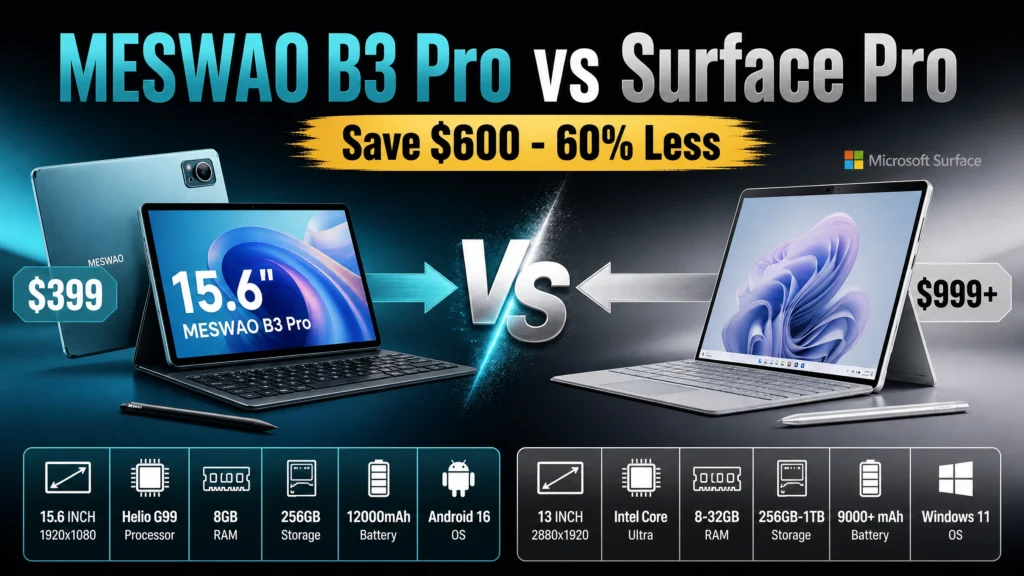
The Meswao B3 Pro 15.6-inch tablet offers an excellent value proposition. For just $399, you get a screen that’s nearly as large as a standard sheet music page, excellent battery life (12,000mAh), and powerful enough performance for all music apps. While it’s less portable than smaller tablets, it’s still manageable for rehearsals and lessons.
Pros of 15.6-Inch Tablets:
- Displays nearly full-page sheet music at 100% zoom
- Significantly cheaper than 13-inch professional tablets ($399 vs $1,099)
- Excellent battery life for long practice sessions
- Larger screen reduces eye strain
- Great for studio and home practice
- Perfect for musicians who also want to watch tutorials and videos
Cons of 15.6-Inch Tablets:
- Less portable than smaller tablets
- Requires a tablet stand for comfortable use
- May be too large for some music bags
- Heavier than 10-inch and 13-inch options
Size Comparison: What Musicians Actually Need
The question “what size tablet for sheet music” doesn’t have a one-size-fits-all answer. It depends on your specific needs:
Choose 10-inch if:
- You prioritize portability above all else
- You only read simple lead sheets or chord charts
- You’re on a tight budget
- You travel frequently for performances
Choose 13-inch if:
- You’re a professional musician
- You need the absolute best display quality
- You want to use stylus annotation tools
- You’re willing to invest in premium equipment
Choose 15.6-inch if:
- You want maximum screen real estate at affordable prices
- You practice primarily at home or in studios
- You want to reduce eye strain during long practice sessions
- You want excellent value for your money
- You also want to watch tutorials and videos comfortably
The Physics of Sheet Music Reading
To understand why size matters for sheet music, consider the physics of reading. Standard sheet music has a page size of 8.5″ × 11″. When you display this on a 10-inch tablet, you’re already at the limit of the screen diagonal. Any zooming in means scrolling; any zooming out means struggling to read small notes.
A 13-inch tablet gets you closer to full-page viewing, but a 15.6-inch tablet actually exceeds the standard sheet music page size, giving you true full-page viewing without any scrolling or zooming.
Eye Strain and Readability: The Hidden Factor
Musicians often overlook the impact of screen size on eye strain. When you’re reading small sheet music on a 10-inch tablet, you’re forcing your eyes to work harder. This leads to:
- Faster eye fatigue during practice sessions
- Reduced practice duration before needing a break
- Decreased focus on the music itself
- Potential long-term vision problems
A larger screen like the 15.6-inch tablet reduces this strain significantly, allowing you to practice longer and more comfortably.
Practical Considerations: Stands and Setup
Tablet size also affects how you set up your practice space. A 10-inch tablet can be held in your hand or placed on a small stand. A 13-inch tablet typically requires a stand. A 15.6-inch tablet definitely requires a stand, but the larger screen makes it worth the investment in a quality digital sheet music stand.
A proper tablet stand keeps your screen at eye level, reducing neck strain and improving your posture during practice—an important consideration for musicians who spend hours practicing.
Frequently Asked Questions
Q: Can I use a 10-inch tablet for sheet music?
A: Yes, but you’ll need to zoom in and scroll frequently. For casual musicians reading simple lead sheets, it’s acceptable. For serious musicians reading complex scores, it’s not ideal.
Q: Is a 13-inch tablet worth the extra cost?
A: If you’re a professional musician or willing to invest in premium equipment, yes. The display quality and app ecosystem are excellent. However, if you’re budget-conscious, a 15.6-inch tablet offers better value.
Q: What’s the ideal tablet size for sheet music?
A: 13-15.6 inches is ideal. This range provides full-page viewing without excessive zooming. The 15.6-inch Meswao B3 Pro offers the best value in this range.
Q: Do I need a stylus for sheet music?
A: Not necessarily. A stylus is useful for annotation if you want to mark up scores, but it’s not essential for reading sheet music.
Q: How does tablet size affect battery life?
A: Larger tablets typically have larger batteries. The 15.6-inch Meswao B3 Pro has a 12,000mAh battery, providing excellent all-day battery life for practice sessions.
Q: Can I use a tablet larger than 15.6 inches?
A: Technically yes, but tablets larger than 15.6 inches become impractical for musicians due to weight and portability issues. 15.6 inches is the practical maximum.
Once you have settled on a size, the next question is which model to buy – our MESWAO tablet for sheet music model guide compares every current MESWAO tablet for score reading, with real page-fit numbers for each screen.
Conclusion: Choose the Right Size for Your Needs
The question “what size tablet for sheet music” ultimately comes down to your priorities. If portability is paramount, choose 10-inch. If you want professional-grade quality, choose 13-inch. If you want the best balance of screen size, affordability, and battery life, choose 15.6-inch.
For most musicians, the 15.6-inch Meswao B3 Pro represents the best value. It provides nearly full-page sheet music viewing, excellent battery life, and a price point that won’t break the bank. Combined with a quality tablet stand, it creates an ideal practice setup that rivals much more expensive professional tablets.
Remember: the best tablet for sheet music is the one that fits your specific needs, budget, and practice style. Consider your priorities carefully before making your purchase decision.
Still deciding on size? Meswao covers the whole ladder — the 14.1″ B1, 15.4″ B4, 15.6″ B3 Pro, and the flagship 16″ B5. Compare them all in the large-screen tablet collection.